
HOLT, Fla., Nov. 4, 2023—Daylight Saving Time comes to an end once again tomorrow.
That means everyone gets an extra hour of sleep as we “fall back.”
According to New Jersey’s Monmouth University poll last year, six out of 10 Americans want to make Daylight Saving Time permanent to have later sunrise and sunset hours.
There’s been a number of attempts to make DST permanent throughout the United States, but Congress hasn’t been able to come to an agreement just yet.

In 2018, Florida became the first state to pass a law to permanently observe Daylight Saving Time. In the last five years, 19 states have enacted legislation or passed resolutions following Florida’s lead, including Alabama and Georgia who passed laws in 2021.
In 2023, at least 29 states are considering some kind of legislative action related to permanently changing the clocks.
The Sunshine Protection Law, first introduced in Congress by Florida Sen. Marco Rubio in 2018, sought to make DST permanent year round. The Senate unanimously passed the bill in 2022, but it didn’t come up for a vote in the House of Representatives in 2022.
This year’s version of the time-change bill didn’t pass the Senate.
Short-lived permanent change
During the oil embargo in 1973, Congress ordered clocks be set to DST year round to save energy.
From January 1974 to April 1975, clocks did not change back to standard time.
However, the change became unpopular as parents complained about their children standing at bus stops in the dark and dairy farmers who were unhappy they had to start their days earlier because cows, whose schedules didn’t change, needed to be milked an hour earlier.
When October 1975 rolled around, clocks once again shifted back to standard time.

Establishing time zones
Before the establishment of time zones in 1883, there were more than 144 local times used in North America, according to the U.S. Department of Transportation.
As railroad use increased, in 1883, the railroad established four time zones across the United States to standardize shipping and receiving and to avoid delays and collisions. Then, in 1918 during World War I, five time zones were established: Eastern, Central, Mountain, Pacific and Alaska. Hawaii-Aleutian, Samoa and Chamorro round out U.S.’s time zones.
Shifting time
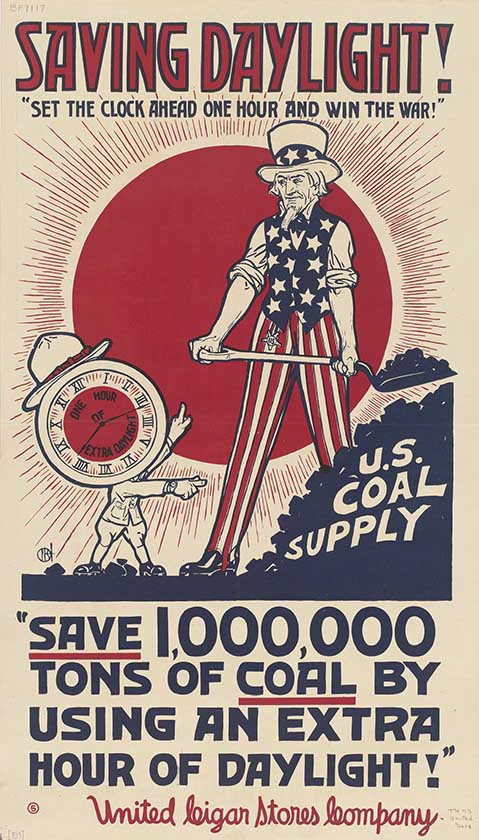
Changing the clocks twice a year dates back to more than a century ago when nations attempted to save energy during World War I. Germany was the first country to make the change. The United States followed in 1918. The change became permanent with the passing of the Uniform Act in 1966.
Hawaii and Arizona are the only two U.S. states that do not observe Daylight Saving Time. They remain on standard time.
American territories of Puerto Rico, the Virgin Islands, Guam, American Samos and the Northern Mariana Islands also do not change their clocks.
Florida and other states that have passed laws to make Daylight Saving Time permanent must wait for Congress to pass a law to make it official.
 Holt Enterprise News