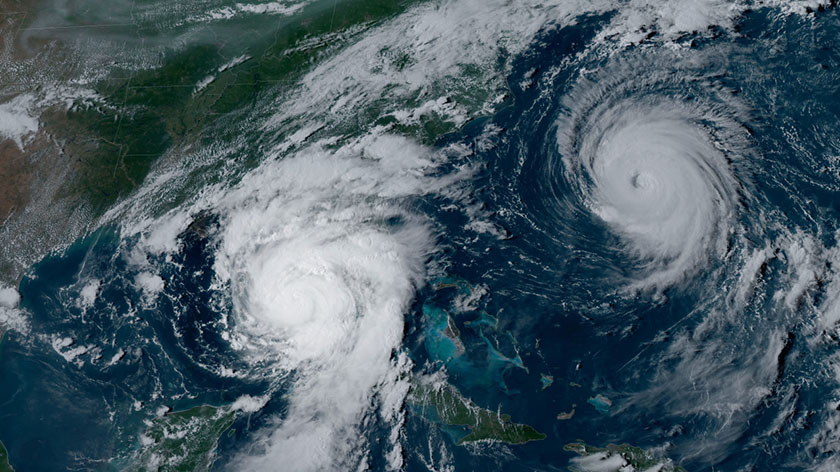
HOLT, Fla., Jan. 28, 2023—The Atlantic basin saw 20 named storms in 2023, ranking it the fourth year for the most named storms.
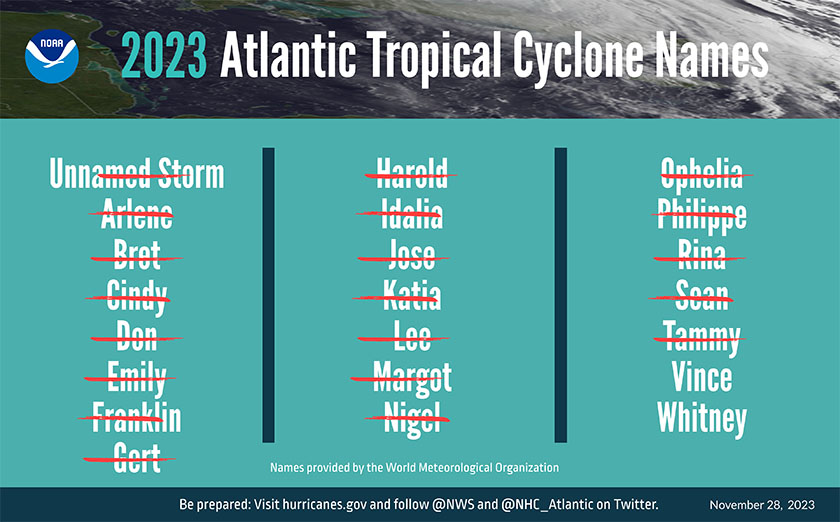
There were 20 named storms, seven which became hurricanes and three that intensified to major hurricanes: Franklin, Idalia and Lee. The season ended with only two unused names left on the list.
An average season has 14 named storms and seven hurricanes with three of them strengthening to category 3 or higher.
The record season occurred during a strong El Niño and record-warm Atlantic sea surface temperatures which weakened the Bermuda High, allowing storms to turn north and east, tracking out to sea rather than being pushed toward the United States.
Although there was above-normal seasonal activity, only one hurricane, category 3 Idalia, made landfall in the United States, near Keaton Beach, Fla., with a storm surge of 7-12 feet.
Two other storms, both tropical, also made landfall in the United States. Harold made landfall on Padre Island, Texas, Aug. 22 and Ophelia made landfall on Emerald Isle, N.C. Sept. 22.
Hurricane Lee was the strongest storm of the 2023 season, reaching category 5 peak with winds at 165 mph. It remained in the Atlantic, but later hit Nova Scotia as an extratropical storm.
“The Atlantic basin produced the most named storms of any El Niño- influenced year in the modern record,” said Matthew Rosencrans, lead hurricane forecaster at NOAA’s Climate Prediction Center, a division of NOAA’s National Weather Service. “The record-warm ocean temperatures in the Atlantic provided a strong counterbalance to the traditional El Niño impacts.”
Traditionally, an El Niño season produces less tropical activity due to drier air. However, the record-high ocean temperatures helped to counterbalance that.
While the official hurricane season runs from June 1 through Nov. 30, a tropical system can form at any time of the year.
Long before the official start of the 2023 season, an unnamed subtropical storm formed on Jan. 16.
Staff and NOAA
 Holt Enterprise News