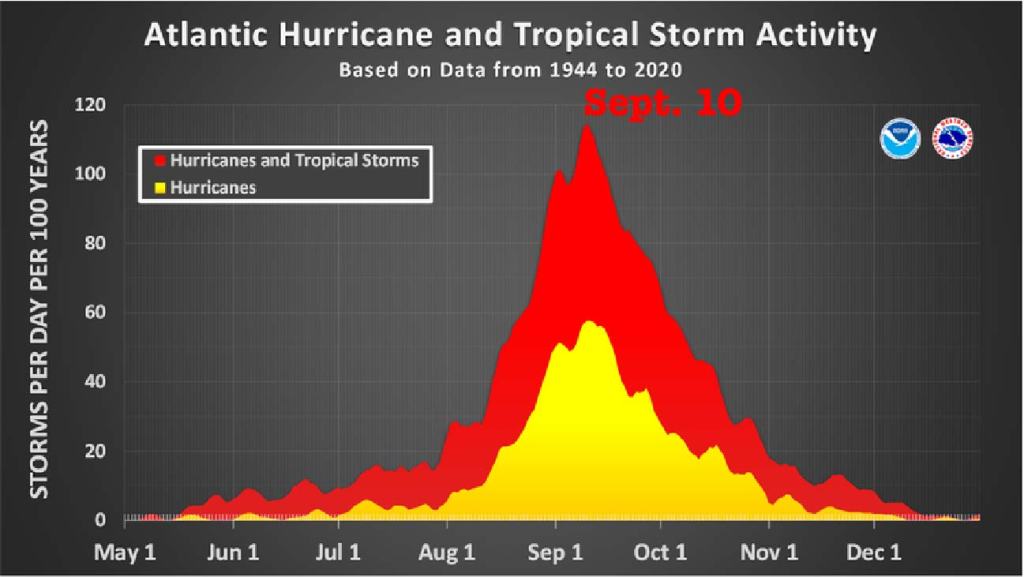
HOLT, Fla., Sept. 10, 2025—Today is the official peak of the 2025 hurricane season.
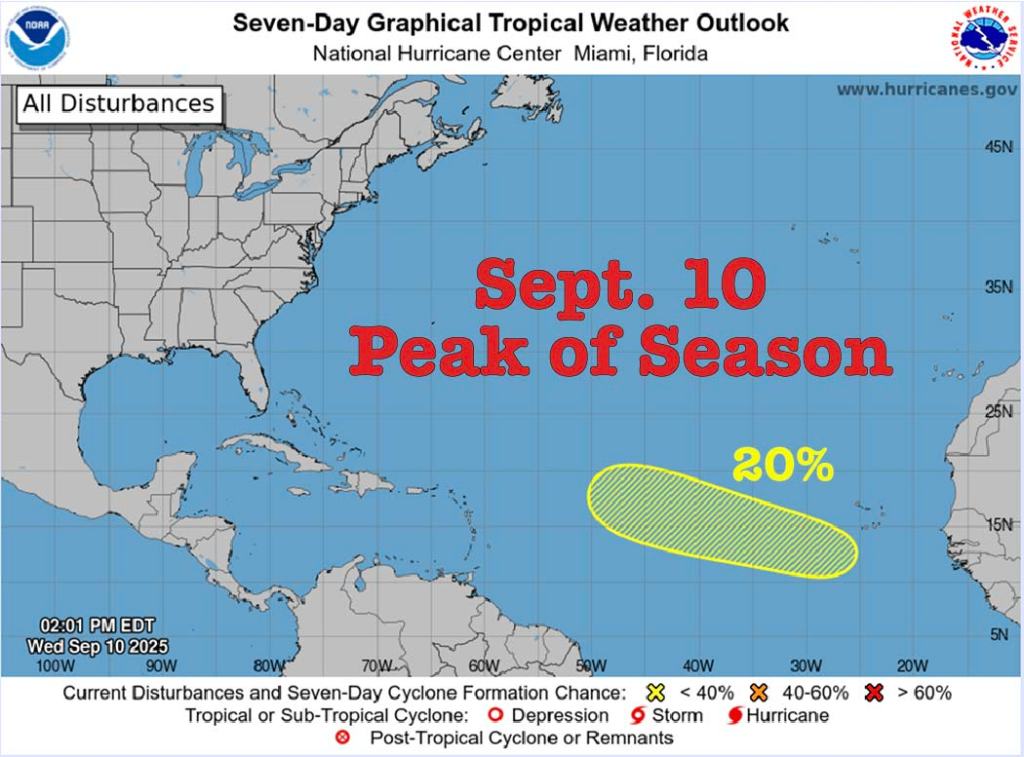
In seeming recognition, the National Hurricane Center identified a new area in the eastern tropical Atlantic where an African wave is expected to emerge in a couple of days. Some slow development is possible during the weekend into early next week. The NHC is giving it a 20 percent chance for now.
The season thus far
The hurricane season runs from June 1 to Nov. 30 with the midpoint falling around Aug. 30. However, the climatic peak of the season, based on past data, is considered to be Sept. 10 with the most activity traditionally occurring between mid-August to mid-October.
This year had a “late” start. Tropical Storm Andrea, the first named storm of the 2025 season, formed June 23, marking the latest start of a hurricane season since 2014.
Last year saw its first named storm June 19. The 2023 hurricane season kicked off in January with an unnamed subtropical storm. The first named storm, Tropical Storm Arlene, followed in May and was also a pre-season storm.
So far this year, there have been six named storms, but only one hurricane. Last year, there were four hurricanes by peak of season. Hurricane Beryl, which formed in June 2024, strengthened to category 5.
Above-average season
Forecasters predicted an above-average season prior to the June 1 start. Mid-season forecasts kept 2025 as an above-average season with downward adjustments of generally one fewer storm. The average prediction for 2025 is 13-18 named storms, 5-9 hurricanes and 2-5 major hurricanes.
Hurricane Erin, which formed last month, was the season’s first hurricane and first major hurricane. It also reached category 5 strength.
Last season, there were two category 5 storms, Beryl in July and Milton in October. The majority of the storms, 11 out of 18, occurred after the seasonal peak.
The rest of the season
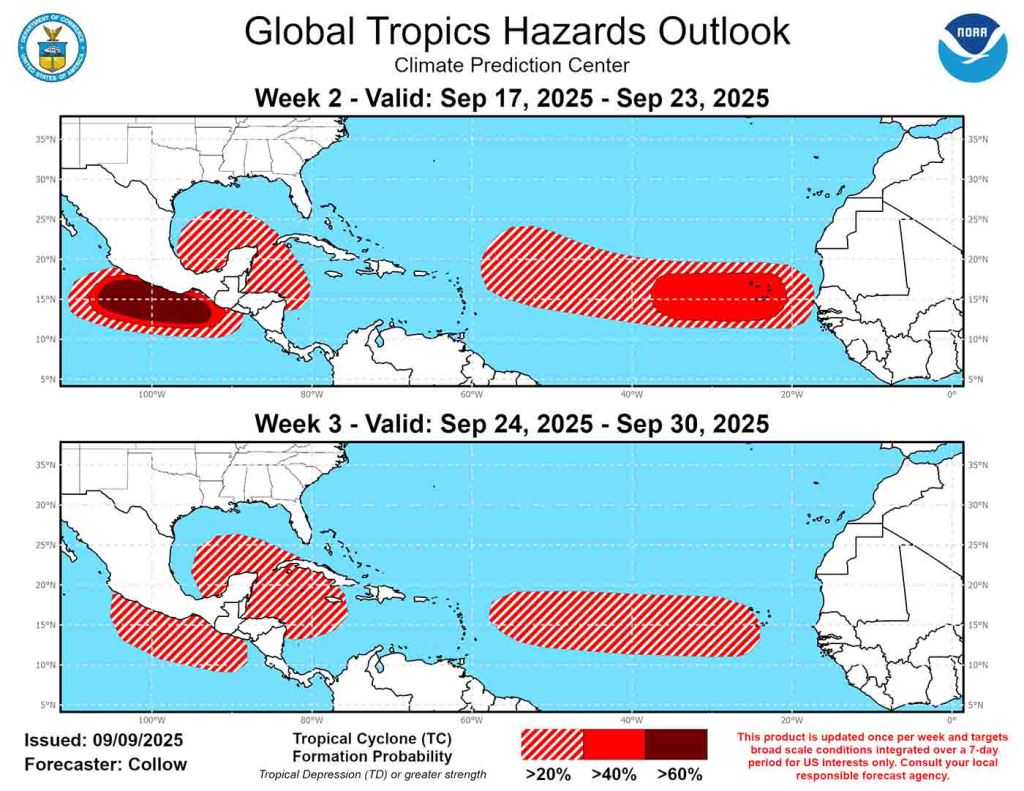
As for the rest of the season, the NHC has issued a two-week look ahead valid for Sept. 17 through the end of the month (or at least until it issues another global tropics hazard outlook). It shows the probability of some kind of tropical activity forming in the tropical Atlantic as well as the southern Gulf region.
 Holt Enterprise News